Triodian · Governance model
Inverting AI governance.
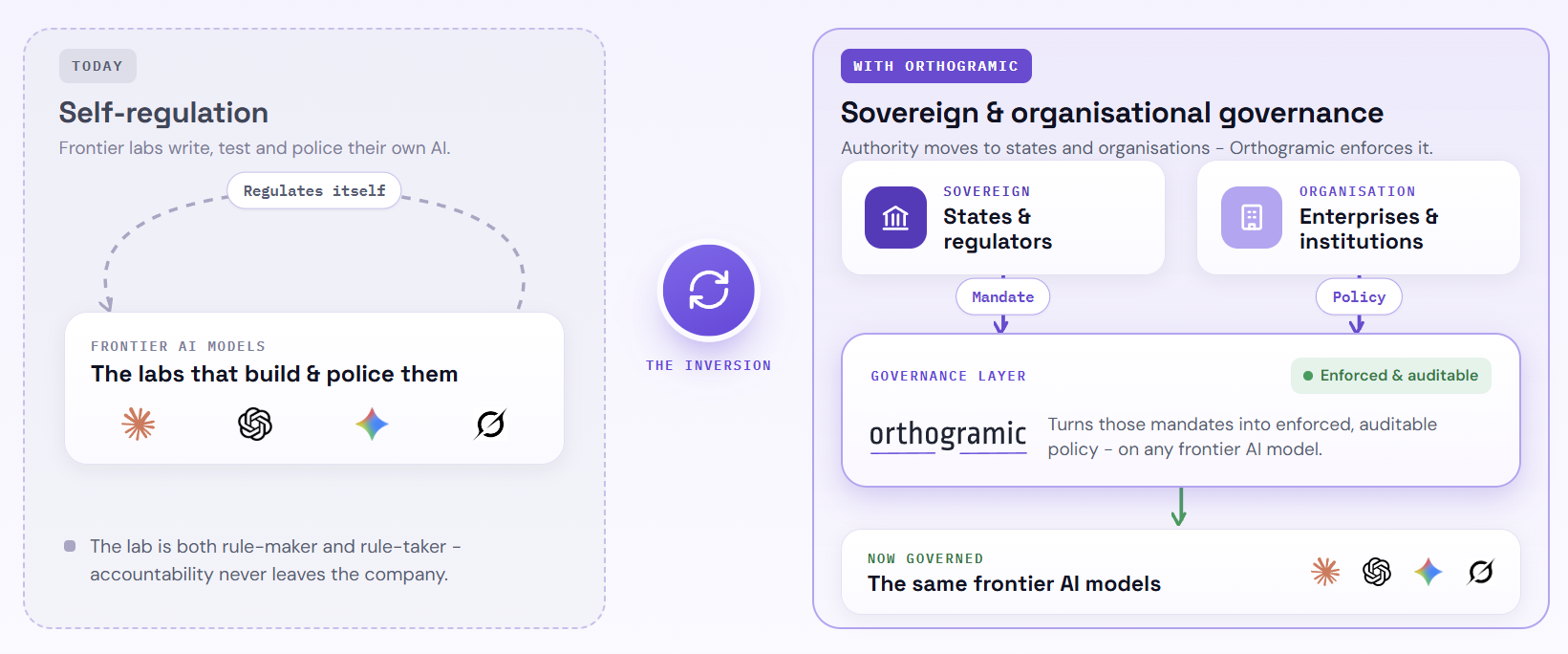
From frontier labs that regulate themselves, to sovereign and organisational control, enforced in hardware by Triodian.
How it works today
Self-regulation wasn't a dodge. It was the only option available.
Until now, the party best placed to govern a frontier model was the lab that built it, so governance sat with the rule-maker, because no one else could reach the point where the model acts. That was not a loophole; it was the limit of what the technology allowed. What changes the arrangement is that enforcement can now sit somewhere else: below the model, under the authority of the institution deploying it.
Who holds the enforcer
Inverting authority only works if the enforcement layer cannot itself be captured. The patent sits in the independent Foundation, beyond the founder's reach and any acquirer's. See how it's held →
Governance today asks you to believe a compliance claim made by the party that benefits from being believed. Triodian replaces it with an enforced measurement against a locally declared boundary, discharged by a proof anyone can check.