Ownership & control
Mission governance has failed once. It's vulnerable to fail again.
For a governance layer, capture-resistance is not a values statement, it is the product working. The hardware layer that governs AI becomes the economy's choke point; who holds it decides whether that control can ever be captured.
Why structure was supposed to be enough
The idea was sound: bind the mission in law, above the reach of any single owner.
A capped-profit company. A purpose written into the certificate of incorporation. An independent trust with a failsafe. These were not naïve instruments, they were designed by serious people precisely to hold a mission steady when capital pushed against it. Anyone governing a consequential technology should want exactly this. The question is not whether the intent was real. It is whether intent, written as a rule someone can later amend, survives contact with enough capital.
The two precedents
Two mission-lock structures met the force of capital. Both moved.
OpenAI
Tested · resolvedNon-profit control, capped profit. Tested Nov 2023: the board removed the CEO and reinstated him within five days under investor and employee pressure; most of the board then left. Resolved Oct 2025: recapitalisation, profit caps lifted; the Foundation retains control rights and a ~26% stake, Microsoft ~27%. Confidential draft S-1 submitted 22 May 2026.
"The cap was the commitment. Capital was the counterparty. The cap moved."
Anthropic
Untested · test imminentThe Long-Term Benefit Trust, a Delaware PBC with the mission in its certificate of incorporation, supplemented by an independent trust. Its failsafe clause permits Trust amendment by sufficiently large stockholder supermajorities, now also ¾ of the board. Confidential draft S-1 submitted 1 June 2026.
"A serious instrument that has not yet met the force that broke the last one."
Sources, all company-published: OpenAI, openai.com/our-structure; recapitalisation completed 28 Oct 2025; confidential draft S-1 submitted 22 May 2026. Anthropic, anthropic.com/news/the-long-term-benefit-trust; confidential draft S-1 submitted 1 Jun 2026. Board and personnel events of November 2023 are drawn from contemporaneous reporting and are not disputed by the company. Retrieved 28 July 2026.
What Triodian did differently
Don't ask to be trusted. Remove the ability to defect.
A threshold above any coalition
Unanimous directors + 90% of members to amend; any weakening amendment is void.
Custody outside the cap table
IP held by an ACNC-registered charity, the Casuarina Foundation, not by a subsidiary of the entity raising capital.
Entrenched before it's worth capturing
The nine provisions are executed at registration, dormant leverage for no one.
Priced beyond quiet re-capture
Licence terms published FRAND with anti-accumulation limits, so no future owner can re-price the layer once the standard propagates.
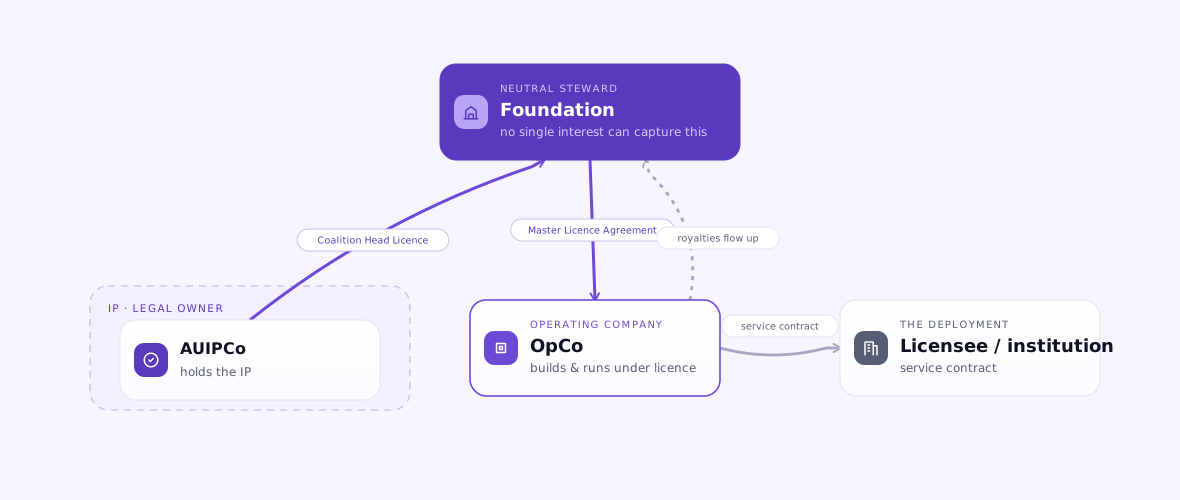
The Casuarina Foundation structure
How IP, the operating company and the customer connect.
Foundation IP
Triodian IP Holdings + patent portfolios
OpCo
triodian, builds & runs under licence
Launch customer
Regulated institution
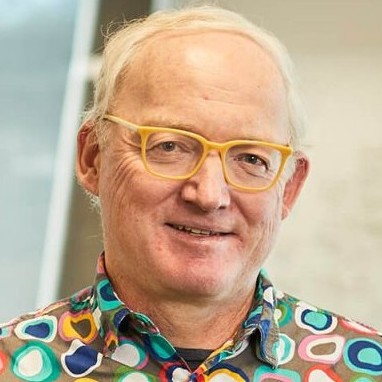
The independent chair
Chair agreed · registration underwayProfessor Toby Walsh has agreed to chair the Foundation.
Laureate Fellow and Scientia Professor of Artificial Intelligence at UNSW, Professor Walsh has agreed to serve as independent chair of the Casuarina Foundation. He leads the guardian, not the company; the founder holds no veto. He takes up the role on the Foundation's establishment.
Mission lock
Not a policy statement. Nine provisions, entrenched.
Amendment threshold
Unanimous directors + 90% of members. Any amendment that would weaken any provision is void. The nine survive any change of ownership, acquisition or board.
Public Access Guarantee
Specifications permanently free to study and evaluate; implementation licenses, understanding never does.
FRAND Licensing
Fair, reasonable and non-discriminatory terms, published.
Small Entity Exemption
Under 50 employees and under $10M revenue: no hardware royalties for non-commercial or internal use.
Anti-Accumulation Rule
3% of AI-related revenue as a ceiling on aggregate exposure, royalty stacking structurally impossible.
Developing Nation Programme
A minimum 10% of net licensing income directed to it.
Transparency Mandate
The terms, the ledger of licences and the governance are public.
Citizen Benefit Report
A recurring public account of who the layer served.
Anti-Acquisition
Patents may never be exclusively transferred to a single private entity.
Content-Provenance Open Dedication
C2PA / Content Credentials / CAWG carved out to royalty-free public use.
No carve-out for any coalition member, including the founding member. And no future admission can vary them.
Who holds the choke point decides everything
Governing body
Casuarina Foundation
The asset itself can't be quietly captured.
Mission lock
Nine irrevocable provisions
Void any weakening amendment.
Licensing terms
FRAND + anti-accumulation
No future owner can re-price the layer.
A governance layer that stays governable.